that speak a thousand words
"Hope"
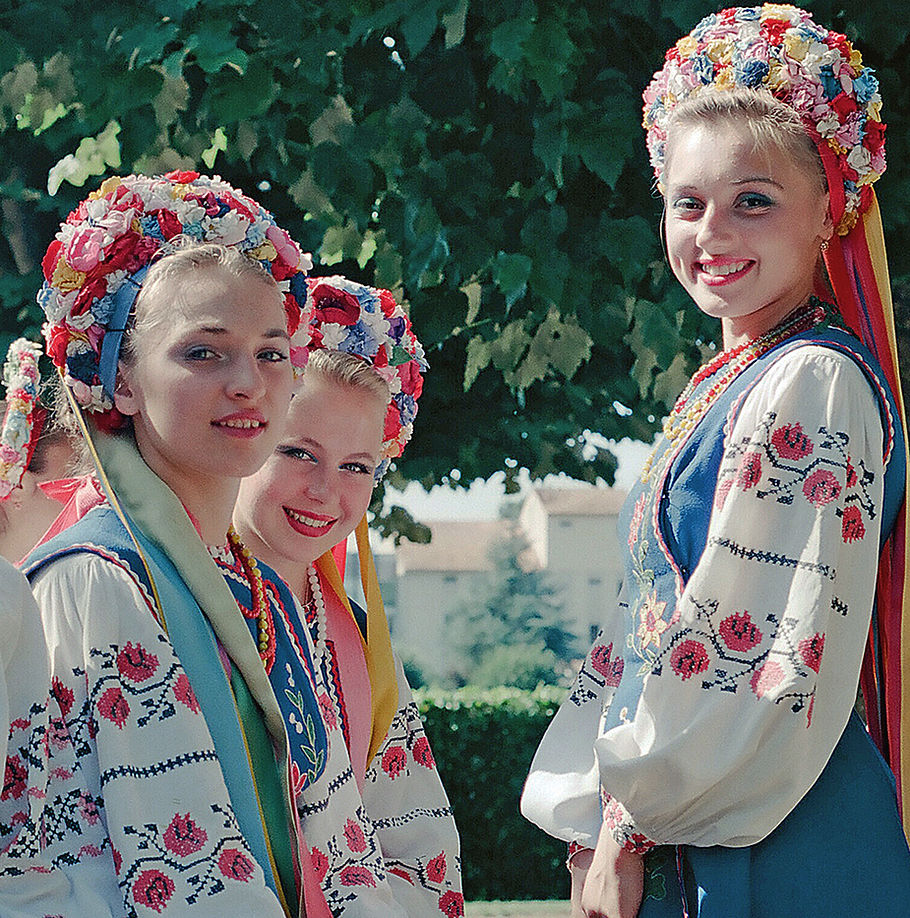
I know. You’re thinking, “Gotta be AI enhanced.”
Or perhaps I staged this. You know, move a little left. Chin up. A little more right.
Well, my friends, you might be wrong. I swear this Kodak moment was not staged. Perhaps you are thinking they were smiling at me, but I’m afraid that is also not true. I’m pretty sure these smiles were for the camera.
Well done, Nikon.
This photo was snapped in Almaty, Kazakhstan in early 2002. I do not speak Russian, or Kazakh for that matter, but the clues were evident for a festival. The flowers. The colors. The happy faces. And indeed, it was spring.
Call me a high-risk gambler, but I’m betting on a spring festival.
And these happy Kazakhs are more than just smiley faces. They are dancers. Believe me, the Kazakhs can dance. And eat. And pose for the Nikon. But on this day, I saw in these three the future. A hopeful future. Whatever it is they do, wherever it is they go, I will always remember them for what they were to me on this day. Happy. Bright. Hopeful.
The shy one. The photogenic one. The defiant one. Dancers all and dance they did on this bright, hopeful, happy, spring day on the Eurasian Steppe.
I was in transit that day, and in need of some hope. On my way home after a six-month slog in grey, wet, freezing-cold Tajikistan, Kazakhstan’s southern neighbor. Tajikistan is also the northern neighbor of Afghanistan and I was asked to deploy to Tajikistan to track down Russian wheat moving south to Afghanistan. Seems we inherited a food shortage in Afghanistan after the Taliban vamoosed into the clouds of the Hindu Kush on the run from our Northern Alliance brethren. Winter was closing in and we had no data on food supply chains moving into Afghanistan’s northern provinces.
At the end of the day, we found the wheat, I got to go home, and this warm spring day was more than welcomed. I had broken through the dense grey shroud of the Tajik winter and stumbled into Disney’s Wide World of Color. Everywhere I looked, there were more costumes, more colors, more food.
What wasn’t there was what I left behind; the start of a 20-year war in Afghanistan where hope would become elusive and the future unknown.
I returned to Afghanistan in 2010 to lead a new office for the State Department located in the U.S. Embassy compound in Kabul. The USAID Stabilization Office, lovingly called the Stab U by those who understood the play, was composed of a gang of young, rough-and-tumble American field professionals dedicated to help and our Afghan colleagues who showed us how to go about it safely. Clearly, progress was apparent since my last visit. You could see it and feel it and sense it from our Afghan colleagues. But we still had a long way to go. Building hope takes a long time.
Upon my arrival at the Stab U trailer, we prepared a program budget request for the following year. It totaled about $720 million dollars for grant and contract activities country wide. Building hope also takes a lot of money.
Despite these demands of time and money, I, for one, was all in. Usually, there are not enough resources to fund stabilization operations, and although $720 million might seem an obscene amount to some (it is), we members of the Stab U felt we could spend it well. We believed in our mission and we were hopeful we could shake out a little hope.
This is where I write something silly. Actually, Harper Lee wrote it. In her book, To Kill a Mockingbird, Atticus Finch, in defining courage, told his two sons, “It’s when you know you’re licked before you begin, but you begin anyway and see it through no matter what.”
Okay, found the food in 2002. Check. New mission in 2010: round up your courage and provide for a hopeful future. Yes, we knew it would be challenging, we knew it was not a one-night gig, and we had more than enough doubters. Afterall, it was Afghanistan. Those in the Stab U knew to help stabilize the environment and rebuild people’s lives, you had to stand fast and provide hope. Every dawn would bring a new challenge, a new risk against success. But every dawn we got out of bed and faced the day.
Get it done. You see it through no matter what.
We believed that persistence breeds success, and success breeds hope and when you have hope, you don’t quit. Quitting is not an option, no matter what.
Until they make it an option.
I sometimes opine that they cut our legs out from under us. Sometimes it’s they pulled the rug out from under us.
Shorter verse, they shafted us.
The “they” here is the U.S. government. Within the two-year time span between 2009 and 2011, they went from surge and counterinsurgency and hope is on the way, to transition and drawdown and sorry, no more money.
If you’re racing a Maserati, they call that a “hairpin turn.” Perhaps an “about face” would suffice given the context of this story.
Either way, “drawdown” does not usually conclude with marching bands and flybys. It’s more like quitting. And when you quit, there goes the hope, flying away like a goose at Christmas.
To be fair, we didn’t formally quit Afghanistan until 2021. But we in the Stab U knew what drawdown meant in 2011.
They took hope away from us. They took hope away from the Afghans. There would be no smiling photos, no hopeful photos. There would be no dancing in Afghanistan.
Perhaps we all knew that from the beginning. Afterall, it was Afghanistan.
And sad as that is, I revered the Stab U team and the courageous work we did every day. Maybe we were licked before we began, but we began anyway and saw it through no matter what.”